
Glass Railings and Ontario Building Code: What Actually Passes Inspection
Frameless glass railings are stunning — and heavily regulated. Here's the short version of what your installer is legally required to do.
The code that governs your railing
In Ontario, glass guards are governed by OBC 4.3.6 and CAN/CGSB-12.20. Together they dictate glass type, thickness, mounting method and load-bearing performance. Homeowners rarely see these documents — but every honest installer works from them.
Laminated is now the standard for guards
As of the most recent code update, guards must use laminated glass (typically 12mm — two 6mm plies with a structural interlayer) so that a fractured panel remains in place. Fully tempered monolithic glass is no longer permitted for many guard applications above 42 inches of fall.
Base shoe vs. standoff — both work
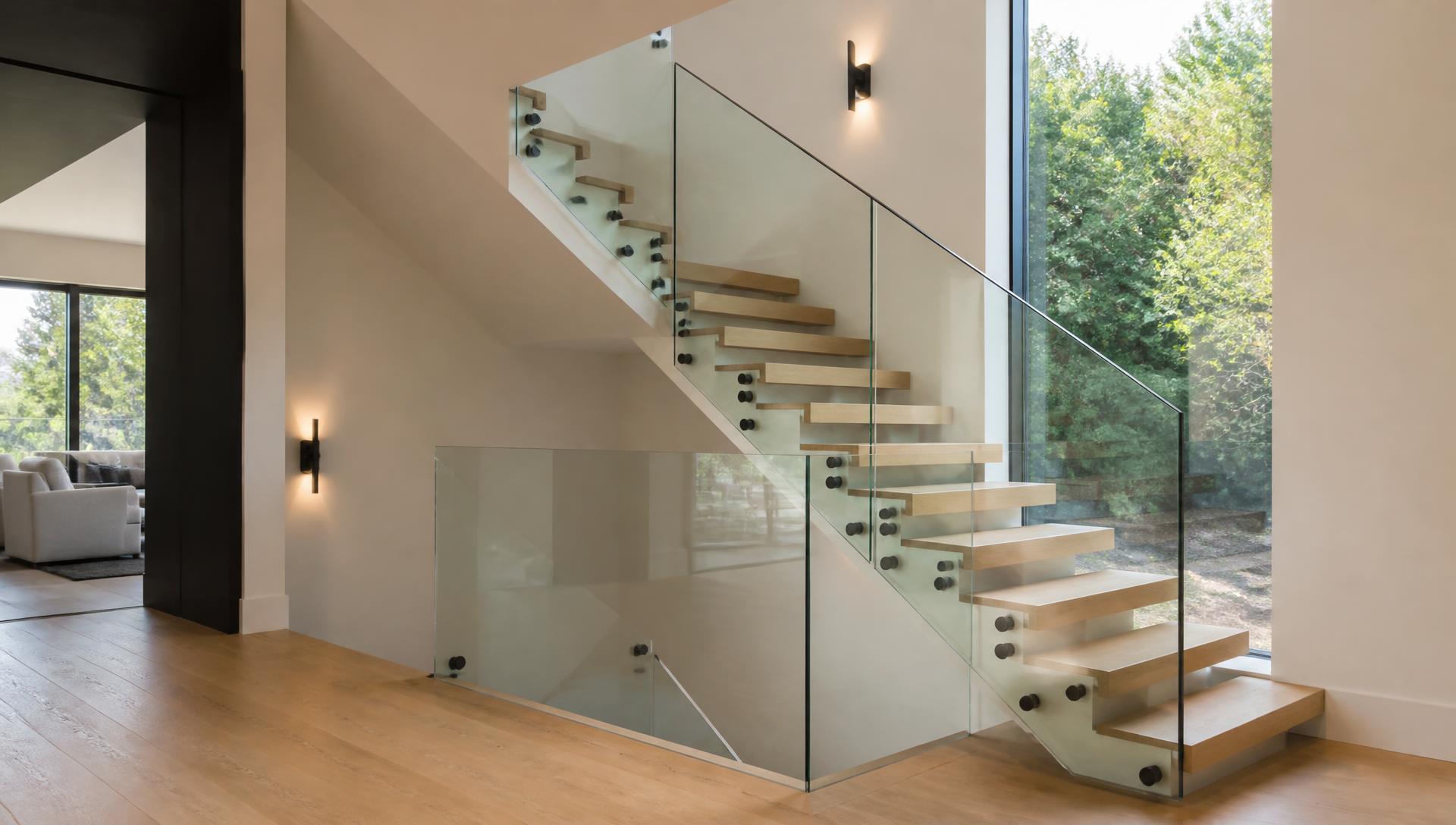
The two premium mounting systems are the aluminum base shoe (a continuous channel) and standoff hardware (individual pucks). Both meet code when properly engineered. Base shoe gives the cleanest sightline; standoffs feel more architectural and are easier to service.
The handrail requirement
Where a glass guard also serves as a stair rail, a graspable handrail is required by code even if the glass extends to full height. This is the single most-cited deficiency on rough inspections in the GTA.
What to ask any installer
Ask for the glass spec sheet, the mounting system engineering letter, and whether they'll pull the permit. If any of those three answers is vague, the install is likely to fail inspection — and quietly, so will your insurance coverage.